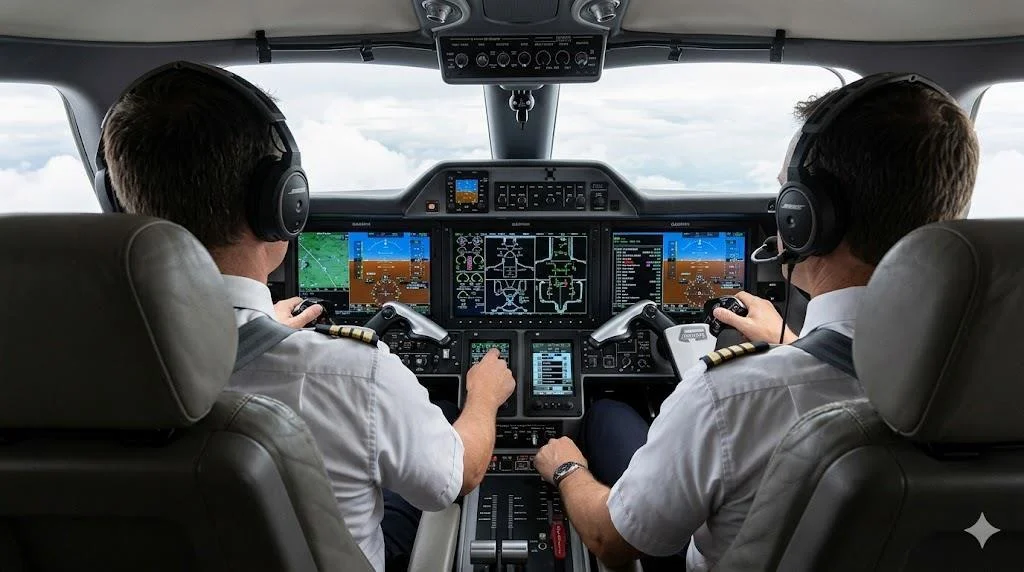
How to Hire a Private Jet Pilot: What Owners Need to Know
Learn how to hire a private jet pilot, including key qualifications, experience requirements, salary expectations, and top qualities to look for.
By PrivateJetNation · 5 min read
Learn how to hire a private jet pilot, including key qualifications, experience requirements, salary expectations, and top qualities to look for.
By PrivateJetNation · 5 min read
Knowing **how to hire a private jet pilot** is one of the most important decisions an aircraft owner will make to ensure passenger safety. Hiring the right flight crew is one of the most important decisions a private jet owner makes, and it is also one of the most misunderstood. Many first-time owners focus primarily on technical credentials, which matter, but there is a lot more to building a great flight crew than hours logged and type ratings held. Here is what to actually look for when you are evaluating candidates.
For Part 91 operations, a captain flying your aircraft must hold an Airline Transport Pilot certificate with a type rating in the specific aircraft. They must have a minimum of 1,500 total flight hours, though in practice you should expect significantly more for the kinds of aircraft most private jet owners operate. First officers in Part 91 operations have a lower floor, but that does not mean you should accept minimums.
If your aircraft is on a charter certificate under Part 135, the requirements are stricter and include specific experience thresholds for captains in that operation. Part 135 operators also require formal company training programs, check rides with designated examiners, and ongoing proficiency requirements.
Beyond the legal minimums, smart buyers look for pilots with substantial time in type, meaning hours specifically in the make and model of aircraft you operate. A pilot with 5,000 total hours but minimal time in a Challenger 350 is a different proposition. Before hiring, make sure you model the pilot salaries within the cost of private jet ownership from one with 2,000 total hours and 1,500 in type. Time in type matters for the nuanced, real-world knowledge that comes from flying a specific aircraft repeatedly across a wide range of conditions.
If your flying involves international routes, especially into complex airspace in Europe, Asia, the Middle East, or Latin America, you need crew with actual experience in those environments. International operations involve navigation through international airspace procedures, customs and immigration coordination, landing slot requirements, over-flight permit processes, and handling situations where ground support may be less reliable than at domestic FBOs. A pilot whose entire career has been domestic flying will face a real learning curve in an international context.
Technical proficiency is necessary but not sufficient. The best private jet pilots are also exceptional communicators and calm decision-makers under pressure. In a job interview, pay attention to how a candidate talks through past challenging situations. Do they demonstrate sound judgment? Do they know when to divert, when to hold, and when to simply say no to a trip? A pilot who cannot clearly explain their decision-making process in a relaxed conversation is worth scrutinizing carefully.
How they communicate with passengers matters too. Your crew represents your aircraft and, in many contexts, your organization. They will interact with guests, coordinate with FBOs and ground handlers, and occasionally be the face of your operation in situations where you are not present. Professionalism, discretion, and genuine courtesy are not optional extras.
Always conduct a thorough background check. The aviation industry has specific resources for this, including the National Driver Register, FAA airman inquiry tools, and the Pilot Records Improvement Act database, which documents accident, incident, and training records. Aviation attorneys who specialize in employment can guide you through what you are legally able to request and review. Safety margins are drastically improved when you understand **how to hire a private jet pilot** with rigorous type-rating training.
Reference checks should be substantive rather than cursory. Call previous employers directly, ask specific questions about how the candidate handled emergencies, difficult passengers, and scheduling pressure, and pay attention to what is not being said as much as what is.
Attracting excellent pilots requires competitive compensation. Captain salaries for private jet operations currently range from approximately $130,000 to $250,000 per year depending on aircraft type, total experience, and geographic market. Large-cabin and ultra-long-range captains in high-demand markets can command significantly more. First officer salaries typically fall in the $80,000 to $130,000 range.
Beyond salary, pilots value schedule predictability, generous training budgets, quality equipment to work with, and a stable work environment. High crew turnover is expensive and disruptive. Investing in your crew's compensation, training, and working conditions is consistently the most cost-effective staffing strategy in the long run.
If you are not familiar with the pilot hiring process, working with an aviation staffing firm that specializes in corporate aviation can save significant time and reduce the risk of a bad hire. These firms maintain databases of available pilots, conduct initial screening, and can help you structure compensation packages that are competitive for your market.
Your crew is the most important safety asset on your aircraft. Hire accordingly.
======================================================================== ======== Following these evaluation criteria will guide you through the process of **how to hire a private jet pilot** who matches your flight profile.
Private Jet Nation connects aircraft owners with resources, advisory services, and listings across the private aviation market. Explore privatejetnation.com.