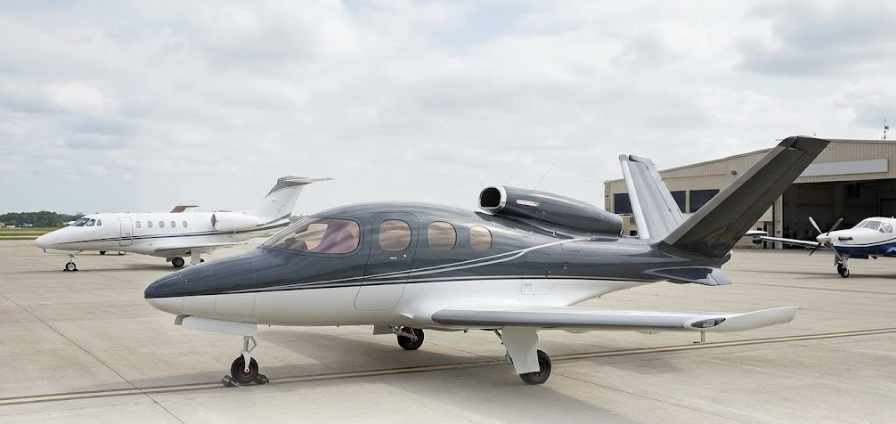
The Private Jet Upgrade Trap: Why Owners Buy the Wrong Aircraft Twice
First time buyers undershoot. Upgrading owners overshoot. Both mistakes cost millions. Here is how to avoid them.
By PrivateJetNation · 5 min read
First time buyers undershoot. Upgrading owners overshoot. Both mistakes cost millions. Here is how to avoid them.
By PrivateJetNation · 5 min read
AMSTAT aircraft resale data tells a consistent story: the average first time private jet buyer sells their aircraft within 26 months. The most common reason cited is mission mismatch, which is a polite way of saying they bought the wrong aircraft. Either it was too small for what they needed, too limited in range for the routes they actually flew, or too large and expensive for the utilization they actually generated.
Upgrading owners make the opposite version of the same mistake. Having experienced the constraints of their first aircraft, they overcorrect, purchasing a larger, longer range, more expensive jet than their actual mission requires.
First time buyers tend to purchase conservatively, both financially and operationally. The prospect of committing to a large cabin jet with $2.5 million in annual fixed costs feels aggressive when you have never owned an aircraft before. So buyers rationalize a smaller, less expensive aircraft as adequate, using their most common trips as the benchmark and mentally setting aside the outlier routes that actually drove their desire for ownership in the first place.
The outlier routes come back. The buyer who purchased a light jet for their typical New York to Florida trips discovers that the annual ski trip to Aspen requires a different aircraft, or that the light jet's four passenger cabin is consistently cramped for their actual traveling party.
The experienced owner making their second purchase has a different failure mode. Having lived through the constraints of their first aircraft, they focus on eliminating every limitation they experienced. They remember the one transatlantic trip where range was tight. They remember the six-seat cabin that was uncomfortable for a group of eight. What they are less likely to remember with equal clarity is how many of their 200 annual trips were handled perfectly by the aircraft they are replacing.
The result is a $40 million ultra long range jet that flies 80 percent of its missions to destinations within 2,000 nautical miles of home base, generating $3.5 million in annual operating costs for missions that a $15 million midsize aircraft would have handled at $1.2 million per year.
The antidote to both failure modes is the same: a rigorous mission analysis conducted before any aircraft conversation. Pull your last 24 months of actual travel data. Every trip, origin, destination, passenger count, and cargo requirements. Map each trip against the performance envelope of candidate aircraft. Not your average trip. All of your trips.
Then ask: what percentage of my trips require the capability of the aircraft I am considering? If a large cabin jet satisfies 98 percent of your trips and a midsize satisfies 90 percent, the question becomes whether the 8 percent gap is worth $1 million or more in additional annual operating costs.
Every aircraft transaction carries friction costs that buyers consistently underestimate. Selling your current aircraft and buying the right one involves broker commissions on both sides, typically two to five percent of aircraft value each. Pre-purchase inspection fees of $30,000 to $80,000. Registration, title, and legal costs. Ferry and positioning costs.
On a $12 million aircraft transaction, total friction costs easily reach $800,000 to $1.5 million. That is the price of getting the first aircraft wrong. It is also the reason that a mission analysis conducted before purchase, which costs nothing, is one of the highest value activities in the entire acquisition process.
The right aircraft is not the one that can handle everything. It is the one that handles your actual distribution of trips at the lowest sustainable total cost of ownership, with supplemental options for the outliers.
Private Jet Nation helps buyers and owners find the right aircraft for their mission. Explore listings and advisory resources at privatejetnation.com.