Understanding the actual **cost of private jet ownership** is crucial before signing a multi-million dollar contract. Buying a private jet is one of those purchases where the sticker price is almost never the number that catches people off guard. First-time buyers regularly come in focused on the acquisition cost and leave surprised by what it actually takes to keep an aircraft in the air, properly staffed, legally compliant, and ready to fly when they need it. This is not a reason to avoid ownership. It is a reason to go in with a clear picture of the full financial commitment before you sign anything.
The Real Cost of Private Jet Ownership: Fixed vs. Variable
Whether you are looking at a pre-owned light jet at $3 million or a new large-cabin aircraft at $60 million or more, the purchase price is a one-time event. Everything else is ongoing. Many aviation advisors suggest that buyers should budget for annual operating costs equal to roughly 10 to 15 percent of the aircraft's purchase price per year as a reasonable baseline, though actual costs will vary significantly based on utilization.
Fixed Costs: The Ones You Pay Whether You Fly or Not
Fixed costs are the expenses you incur regardless of how many hours you actually fly. These include crew salaries, which are typically the largest single fixed cost, crew training, insurance, hangar rental, and management fees if you work with a flight department management aircraft management company.
Crew salaries for a two-pilot operation on a midsize jet typically run between $200,000 and $350,000 per year combined, including benefits. Larger aircraft command higher salaries, and crews with specific type ratings or international experience may come at a premium. Add recurrent simulator training at $20,000 to $40,000 per crew member per year and you start to get a sense of the commitment.
Insurance on a business jet can range from $25,000 per year on a light jet to well over $200,000 on a large-cabin or ultra-long-range aircraft. Hangar costs vary widely by location, from $2,000 per month in secondary markets to $10,000 per month or more at congested airports near major metropolitan areas.
Variable Costs: The Ones That Scale with Use
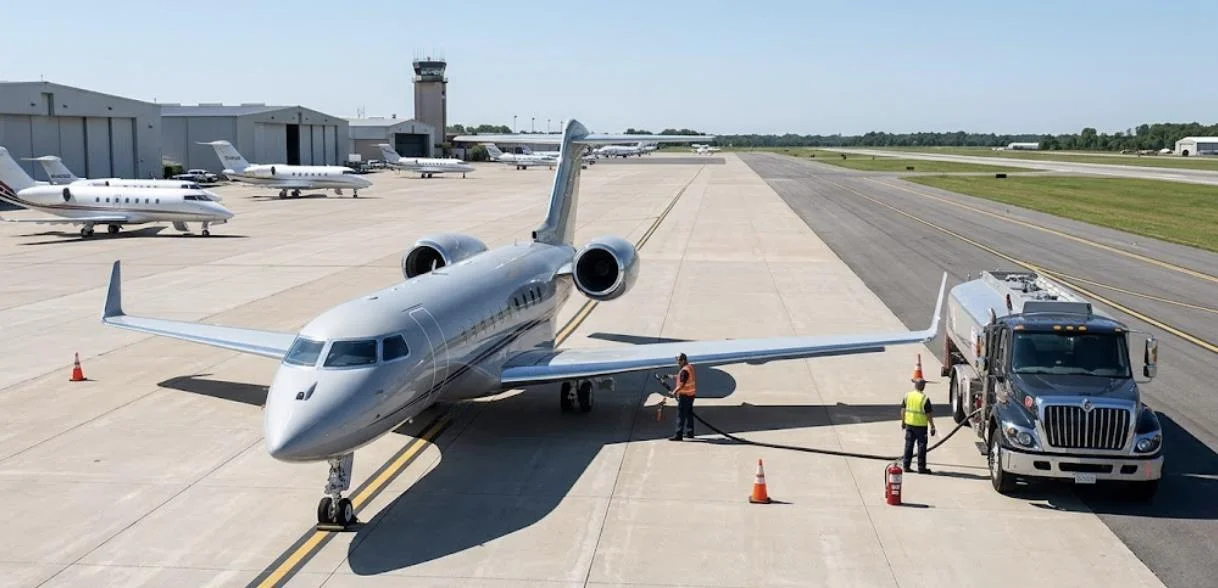
Variable costs include fuel, maintenance, landing fees, catering, and trip-related expenses. Fuel is typically the largest variable cost, and it fluctuates with market conditions. A midsize jet might burn 200 to 250 gallons per hour. A large-cabin jet can burn 350 gallons or more. At current jet fuel prices, a cross-country flight on a large-cabin jet can easily represent $15,000 to $20,000 in fuel alone.
Scheduled maintenance, including engine programs, airframe inspections, and avionics updates, should be budgeted carefully. Enrollment in engine maintenance programs typically
costs between $100 and $400 per engine flight hour depending on the aircraft and program. These programs make future costs predictable, which is why most financially savvy buyers enroll, but they are a real ongoing expense. Failing to budget for scheduled engine overhauls is a common oversight that significantly inflates the overall **cost of private jet ownership**.
The Charter Option: Offsetting Costs Through Revenue
One strategy many owners use to manage operating costs is placing the aircraft on a charter certificate, which means it earns revenue carrying other passengers when the owner is not using it. The economics of this approach depend heavily on the aircraft type, its location, and how actively the charter operation is managed.
A well-positioned midsize jet in a strong charter market might generate $400,000 to $700,000 in gross charter revenue per year. After the management company takes its share and expenses are covered, the net offset to ownership costs can be meaningful. However, charter flying also adds hours to the airframe and increases maintenance frequency, so it is not a free lunch.
If full ownership feels like more than you need, fractional ownership programs like those offered by NetJets, Flexjet, and Airshare let you buy a share of an aircraft, typically corresponding to 50 hours of flight time per year, and share the fixed costs with other owners. Jet cards, meanwhile, let you buy blocks of flight hours with a guaranteed hourly rate without any ownership commitment at all.
Both of these paths have their own cost structures and trade-offs, but for buyers flying fewer than 200 hours per year, they often represent better economics than full ownership.
So What Does Full Ownership Actually Cost Per Year?
A realistic total annual cost for a new midsize jet owner flying 300 hours per year typically falls between $1.8 million and $2.5 million, including all fixed and variable costs. A large-cabin jet owner flying similar hours might spend $3.5 million to $5.5 million annually.
Those numbers are significant. But so is the value of having an aircraft available on your schedule, staffed with your crew, and configured exactly the way you want it. The key is going in with clear eyes.
======================================================================== ======== Analyzing these variables ensures you fully comprehend the complete **cost of private jet ownership** before taking delivery.
Private Jet Nation connects aircraft owners with resources, advisory services, and listings across the private aviation market. Explore privatejetnation.com.